
Addressing Long-Term Issues
Why a Multifaceted Approach Delivers Fast, Effective Results

Beth Howzen (Kais)
November 9, 2025
https://posturetoperformance.com/
IG – Beth33139
Addressing Long-Term Issues: Why a Multifaceted Approach Delivers Fast, Effective Results
Many of my clients seek my help for persistent, long-term issues after consulting multiple specialists. Their symptoms might have eased somewhat, but the root pain or problem often lingers. Skeptical yet desperate, they’re eager to reclaim their active lives.
Chronic or lingering pain develops a life of its own. It dominates the conscious mind, altering posture and movement, while subconsciously dictating strategies to avoid aggravation. These coping mechanisms recruit other muscles, nerves, and tissues to shield the injured area, fostering anxiety about direct treatment—fearing a resurgence or escalation of pain.
A Fresh Perspective
Traditional methods target the injury site directly: probing, prodding, and treating it head-on. I steer clear of that.
Instead, I use an “All Hands On Deck” approach, beginning with respect for the injury—working around it without provoking it. Every pain, injury, or misalignment triggers a cascade of effects, shifting alignments body-wide. These adaptations, meant to protect the original site, create secondary imbalances that often feel subtly “off” without overt pain.
These secondary sites are the “low-hanging fruit” on the path to recovery. They crave proper alignment and pain-free movement, which in turn supports the primary injury. This builds a stable foundation indirectly, avoiding defensive reactions or heightened pain.
Moreover, the body gains a positive experience from the techniques, fostering openness to further treatment without fear of pain returning. It’s a true win-win.
Case Study: My Favorite Neck Client
You might recall this client from my article on Neck Posture (https://bethkais.substack.com/p/neck-posture). She initially sought relief for TMJ and right-side jaw pain. Here’s her neck as of October 2, 2025:
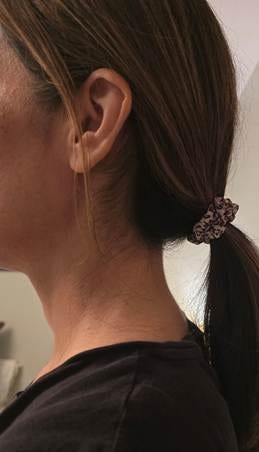
Now preparing for dental work to adjust molar height for better tooth contact, she wants her body in neutral alignment before fittings.
Current Condition:
· TMJ reduced to occasional discomfort
· Tension in ear—relieved by jaw stretch
· Intermittent radiating sensation/numbness from chest down arm into fingers
· Occasional eye twitch
· Discomfort just below right collarbone
· Mild left glute discomfort
· Abdominal training off and on
· Performs pelvis position resets before exercise
· Bike and gym basic exercises
· Zumba
Current Activities
· Abdominal training off and on
· Performs pelvis position resets before exercise (5 minutes)
· Bike and gym basic exercises
· Zumba
Assessment Findings:
· Increased low back arch; pelvis neutral with full range of motion
o Suggests intermittent back stabilization during exercise and daily activities
o Recommendation: Support with abdominal pressure; draw belly button in forcefully on exhales, especially during workouts
o Strengthen abdominals and intra-abdominal pressure
· Possible C2 and first rib misalignment
o Right-side chest/rib release: Felt immediate relief
o C2 alignment: Neck felt great
o Numbness/tingling resolved
Thought Process:
· Symptoms like eye twitch, ear tension, arm radiation, and finger numbness point to a cervical issue at C1/C2
· Left glute discomfort signals spinal misalignment stemming from the upper neck
· Exaggerated low back curve restricts ribcage expansion (flattening the upper back) and weakens neck stabilization
Treatment Plan: Where would you—or your practitioner(s)—begin?
Here’s my sequence:
Restore low back curve
· Establishes a foundation for the torso and neck
· Reinstates stabilizing intra-abdominal pressure
· Aligns ribs and hips for optimal abdominal function
· Technique: Yoga Cat Pose, held for 5 breaths, repeated 3 times. Place a small folded towel under the left knee to correct any lower spine rotation (addressing left glute discomfort)
Activate abdominal muscles
· Reinforces torso stabilization to maintain low back curve and pressure
· Supports natural neck curve
· Deactivates overactive upper shoulder and lower neck muscles
· Technique: Supine Arm Reach with Abdominal Engagement
Reposition right first rib
· Eases chest tension causing arm discomfort
· Normalizes right-side neck muscle length and tension, reducing upper neck pull
· Technique: Right First Rib Release with Left Abdominal Activation
Release right-side jaw tension
· Restores normal jaw muscle balance, easing upper neck strain
· Technique: Pelvic Tilt with Jaw Stretch (Sacro-Sphenoid Connection)
Restore upper neck position
· Repositions C2 vertebra to alleviate ear pressure, nerve compression, radiation, and eye twitch
· Technique: C2 Reset (Seated to minimize neck weight and resistance, preventing compensatory tightening)
Results:
· All issues resolved
By starting from the foundation—literally the bottom—we created stability and reassured the body (consciously and subconsciously) that changes were safe and beneficial. Going forward, subtle cues like ear pressure, eye twitch, or arm radiation can likely be addressed by upper neck restoration alone. The first four steps tackled compensatory patterns triggered by the misaligned C2.
Feel free to reach out with questions!